
June 5, 2026
Your First LASIK Consultation in Houston - What Really Happens
Somewhere between reading about LASIK (Laser-Assisted In Situ Keratomileusis) online and actually booking a consultation, most people hit a wall of uncertainty. Not necessarily about the surgery itself, but about what walking into that first appointment actually looks like. Will it be uncomfortable? How long does it take? What are they testing, and why? Are these completely fair questions?
This article provides a real, step-by-step account of what a LASIK consultation involves and how to avail LASIK eye surgery in Houston, TX, so you can arrive prepared rather than anxious.
Why the Consultation Matters as Much as the Surgery
It's Not Just a Formality
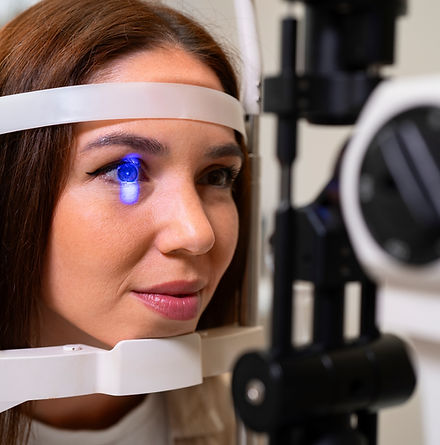
A LASIK consultation is the single most important appointment in the entire treatment process. This is where your eye care team determines whether you're a suitable candidate for LASIK treatment at all, and if so, which approach and which technology is most appropriate for your eyes specifically.
Most consultations at a thorough practice take between 60 and 90 minutes. If someone promises you a 15-minute assessment, that's worth questioning. Precision eye mapping and dilated imaging aren't quick, and they shouldn't be.
The Tests You'll Actually Go Through
Vision and Refraction Measurements
The appointment typically starts with a routine refractive exam, a basic eye test where you read letters off a chart and identify which lens gives you the clearest vision. This establishes a baseline of your current prescription and helps determine whether it has remained stable long enough for you to be considered for LASIK eye surgery in Houston, TX.
From there, the testing becomes more specialized. Here's what most comprehensive LASIK consultations include:
Corneal topography and tomography - Detailed 3D mapping of the surface shape and thickness of your cornea, which is used to determine if there is a corneal irregularity that may impact outcomes or disqualify you from surgery.
Pachymetry - An ultrasound or optical determination of the thickness of the cornea at various points around it, ensuring adequate tissue for reshaping.
Pupil dilation - Drops are used to relax the eye muscles, allowing the doctor to view the lens, retina, and optic nerve without the eye adjusting to light.
Dry eye evaluation -The quality and quantity of tears are examined, as a significant dry eye may impact LASIK eligibility and recovery.
Intraocular pressure measurement -Checks for elevated pressure that could indicate glaucoma, which would change the treatment approach
A few clinics also employ wavefront aberrometry to map all optical imperfections in your eye, beyond just your prescription. This information can be used for customized LASIK treatment for enhanced results, especially in low-light situations.
The Dilation Part — What to Expect
Dilating drops typically take 20 to 30 minutes to take full effect, and your vision will remain blurry and light-sensitive for several hours afterward. This is the main reason you should arrange a ride home from a LASIK consultation rather than driving yourself; it's not cautionary small print, it's genuinely practical advice.
The Conversation With Your Doctor
Once all measurements are complete, you'll sit down with your optometrist or surgeon to review what the tests revealed. This is where the consultation becomes a two-way discussion rather than a series of tests. Dr. Bimal Patel from Focus Refined Eye Care in Houston,TX, reviews each patient's corneal maps and clinical findings personally, walking through what the data means in plain language rather than medical shorthand.
For anyone seriously considering LASIK eye surgery in Houston, TX, this conversation is where you get real answers, which procedure is right for you, what outcome is realistically achievable, and whether any factors might affect your recovery.
What Happens After the Consultation
You Won't Be Pressured to Decide on the Spot
A reputable LASIK practice will give you time to think. You'll typically leave with a printed or emailed summary of your measurements, a clear picture of your candidacy status, and cost information if you want to move forward. There's no obligation to schedule surgery the same day, and any practice that creates that pressure is worth reconsidering.
If you are a good candidate and decide to proceed, surgery is usually scheduled a few days to a couple of weeks out. In the days leading up to surgery, contact lens wearers are typically asked to stop wearing their lenses — soft lenses for at least two weeks, rigid or gas-permeable lenses for four or more — because contacts can temporarily alter corneal shape and affect surgical precision.
The Clear Takeaway
A LASIK consultation is thorough by design. Every test serves a purpose, and knowing what to expect going in makes the whole experience considerably less daunting and significantly more productive. If you've been researching LASIK eye surgery in Houston, TX and haven't taken that first step yet, this is exactly the appointment that turns information into a clear, personal answer.
Frequently Asked Questions
1. How long does a LASIK consultation take?
The total time for a comprehensive LASIK consultation is usually 60 to 90 minutes. The extended time is because the mapping of the cornea, dilation, and doctor review all take more time to get it right.
2. How much does a LASIK consultation cost?
Many LASIK practices offer free initial consultations. Others charge a fee that is applied toward the cost of surgery if you proceed.
3. Is the LASIK consultation painful?
No. The tests include non-invasive and usually comfortable tests. The dilation drops may cause a sting that lasts for several seconds, and your eyes will be sensitive to bright light afterwards, but the actual consultation will not be painful.